
When customers ask us about cellular shades, one question comes up again and again:
“What’s the R-value, and does it really matter?”
Short answer: yes, it does. Cellular shades are one of the most energy-efficient window treatments available, and their R-value plays a big role in keeping your home comfortable year-round.
Below, we’re answering the most common customer questions about cellular shades and R-value, what those numbers actually mean, and how to choose the right option for your space.
What Is R-Value?
R-value measures how well a material resists heat transfer. The higher the R-value, the better the insulation.
In homes, R-value is often used to describe insulation in walls or roofs, but it also applies to window treatments, especially cellular shades.
Since windows are one of the biggest sources of heat loss in winter and heat gain in summer, improving insulation at the window level can make a noticeable difference in comfort and energy use.
How Do Cellular Shades Improve Insulation?
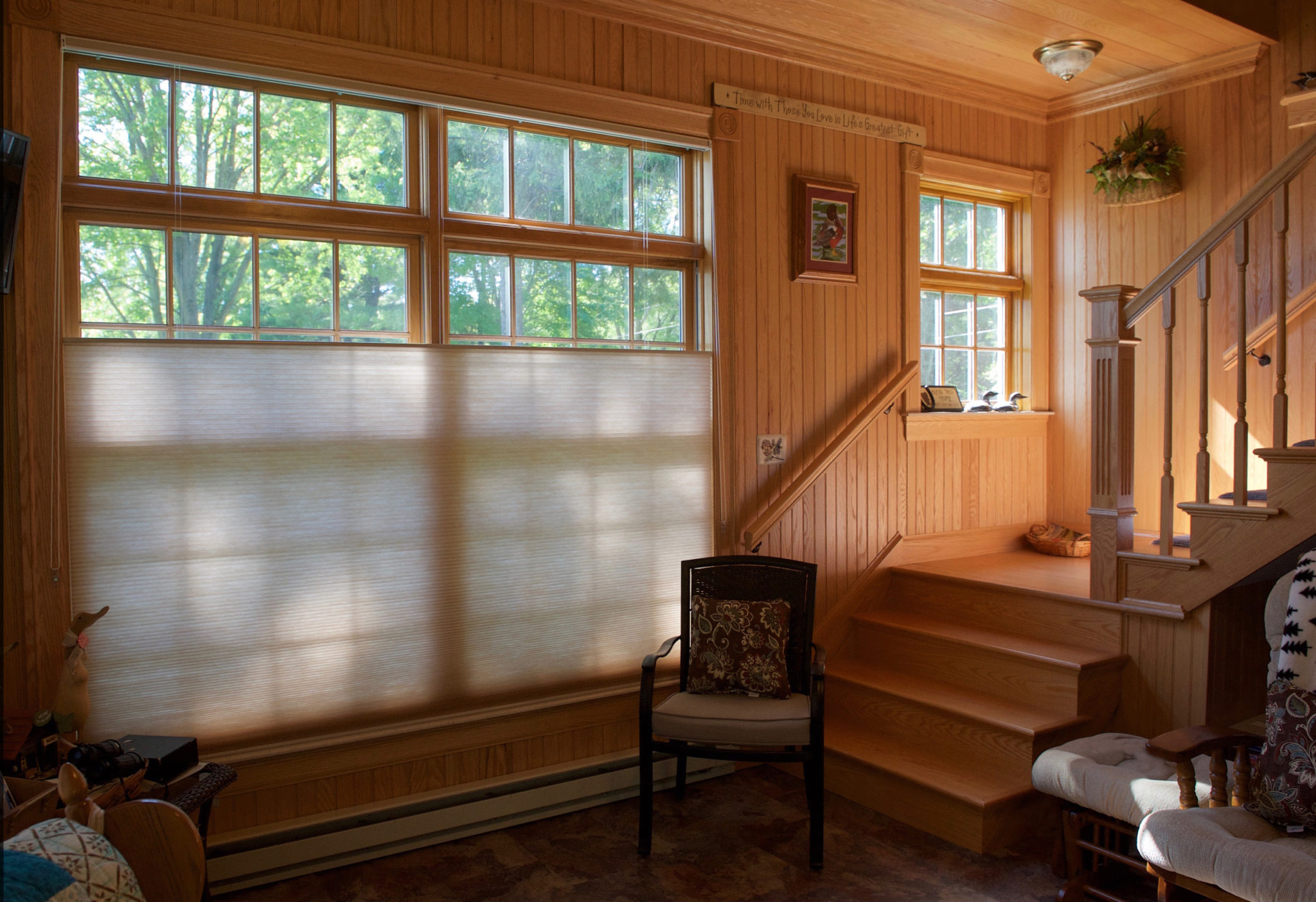
Cellular shades, also called honeycomb shades, are designed with pockets (or “cells”) that trap air. That trapped air creates a barrier between your room and the window, slowing heat transfer.
Think of it like a built-in layer of insulation that works whether the temperature outside is hot or cold.
Key insulating features include:
- Air pockets that reduce heat flow
- Fabrics designed to reflect or retain heat
- Options for single-cell or cell-in-cell construction
Single-Cell vs. Cell-in-Cell: What’s the Difference?
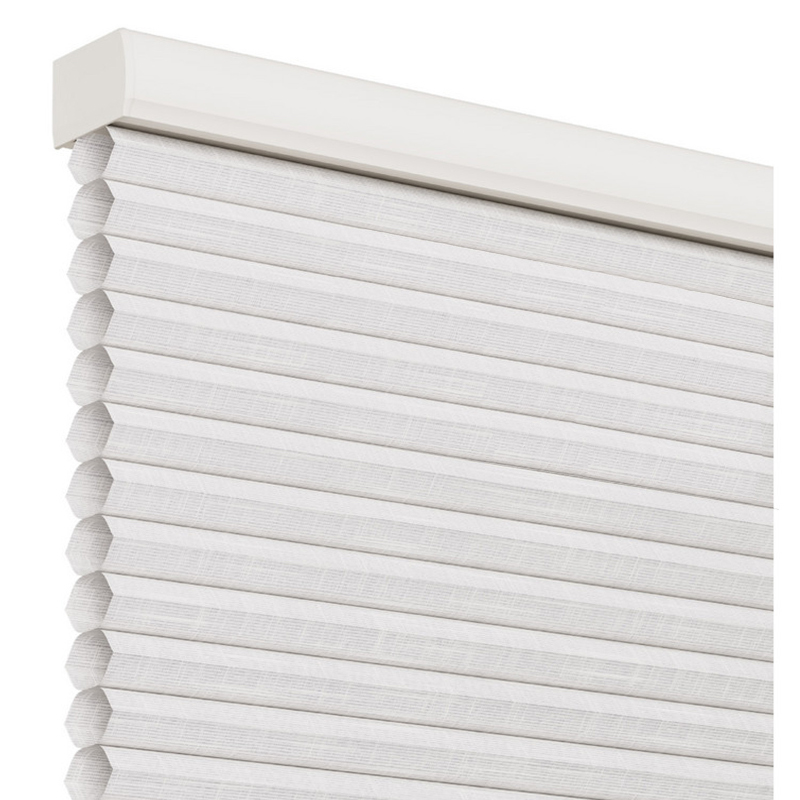
One of the biggest factors affecting R-value is the number of cells in the shade.
Single-Cell Cellular Shades
- One layer of air pockets
- Moderate insulation
- Sleek, lightweight appearance
- Great for mild climates or rooms with minimal temperature swings
Cell-in-Cell Cellular Shades
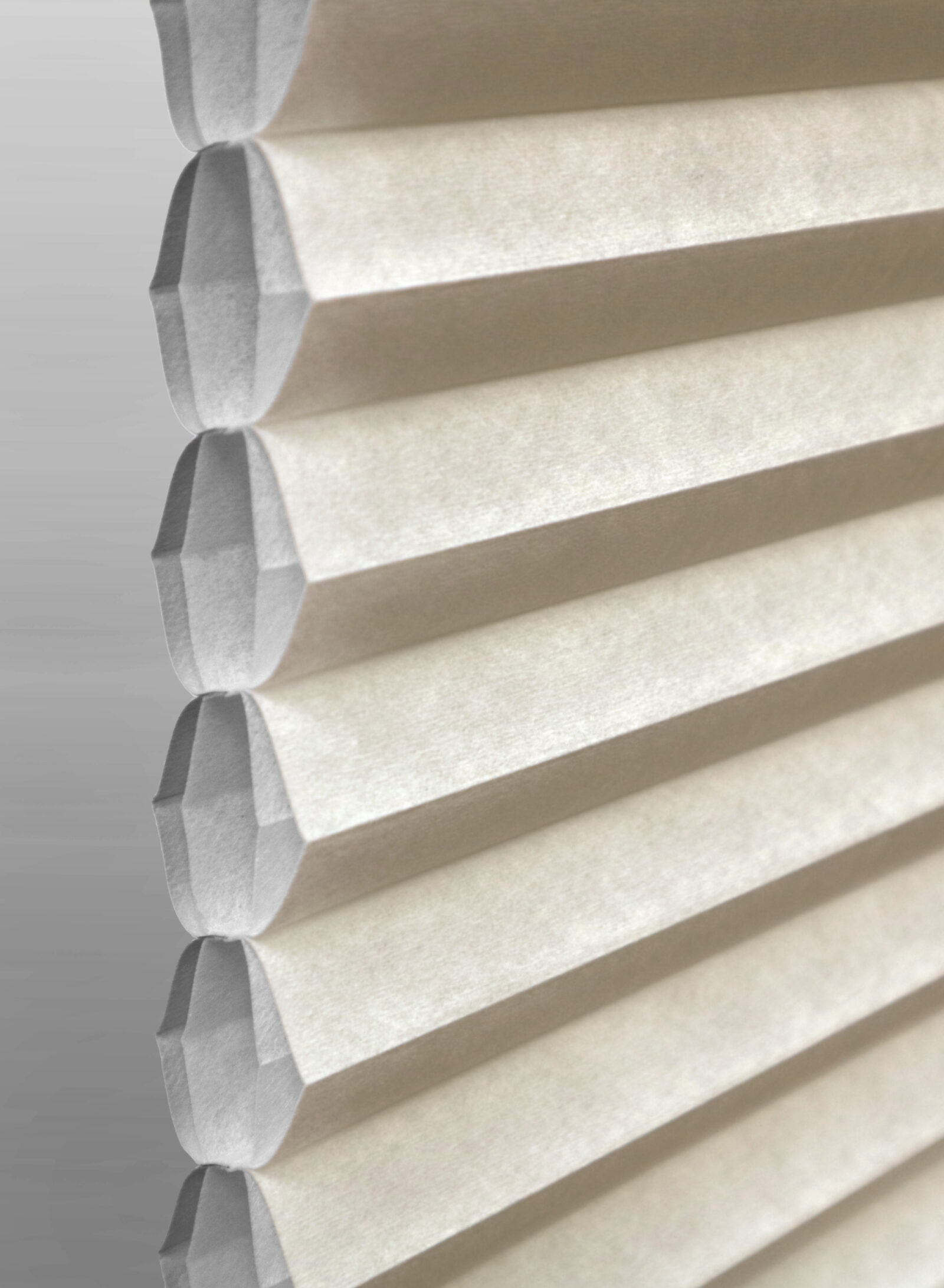
- Two layers of air pocket, one layered within the other
- Higher R-value and better insulation
- Improved energy efficiency
- Ideal for cold winters, hot summers, or large windows
If energy efficiency is a top priority, cell-in-cell cellular shades typically offer the best performance. With any questions about different styles of cellular shade fabrics, don’t hesitate to reach out to our team of Shade Gurus or refer to our Cellular Fabrics FAQs.
How Much Can Cellular Shades Improve Energy Efficiency?
While results vary by home, cellular shades significantly reduce heat loss through windows, especially when paired with proper mounting and fit.
Benefits customers often notice:
- More consistent indoor temperatures
- Less draftiness near windows
- Reduced strain on heating and cooling systems
- Improved comfort in winter and summer
Cellular shades are one of the few window treatments that deliver both style and measurable energy performance. While energy savings vary by state, studies show that EcoSmart Shades have been proven to save between $2,500 and $8,500 per year in heating and cooling costs.
If energy efficiency, comfort, and year-round temperature control matter to you, cellular shades are absolutely worth considering. Their unique design, combined with strong R-values, especially in cell-in-cell options, makes them one of the most effective window treatments for insulation.
Explore our cellular shades collection to find the right balance of insulation, style, and energy efficiency for your home, or reach out to our Shade Gurus for personalized guidance.