
Solar shades are known for softening sunlight, reducing glare on screens, and helping to manage heat gain– all the while still allowing you to enjoy the view outside.
But when it comes to privacy at night, the reality is a bit different. Many folks expect their shades, regardless of the style they choose, to work around the clock, providing privacy day and night.
But the reality is, solar shades actually don’t provide privacy at night. Understanding why can help you choose the right setup for your space without sacrificing on the things you love about them.
Why Solar Shades Don’t Work for Nighttime Privacy
At their core, solar shades are designed to strike a balance between light control and visibility. The woven fabric filters sunlight rather than blocking it completely, which is exactly what allows you to see outside during the day.
That same feature, however, is what limits their ability to provide privacy at night.
During daylight hours, the brightness outside works in your favor. Natural light reflects off the exterior of the shade, making it difficult for someone to see into your home, while still allowing you to see out. It’s a one-way effect that feels almost magical when it’s working properly.
Once the sun goes down and interior lights turn on, that effect flips. Your home becomes the brighter environment, and the shade acts like a lightly filtered screen. From the outside, it becomes much easier to see in—sometimes more clearly than people expect.
To summarize: if your shade allows you to enjoy the view during the day, it won’t block the view into your home at night.
Does Openness Factor Change Anything?
Openness factor plays a role, but it’s important to set expectations around what it can and can’t do.
Solar shade fabrics are rated by how open the weave is. A 1% openness fabric is tightly woven, meaning it allows less light and less visibility through the material compared to higher openness options like 5% or 10%.
While a lower openness will reduce visibility, it won’t eliminate it. Even at 1%, solar shades are not designed to provide full privacy once interior lights are on. Instead, they soften the view and make details less distinct, but shapes and movement can still be visible from outside.
What About Fabric Color?
Color also has a noticeable impact, especially when it comes to how much you can see through the shade.
Darker fabrics tend to be more transparent, which is why they’re often chosen for preserving views during the day. They create a clearer visual connection to the outdoors, but that clarity works both ways once it’s dark.
Lighter fabrics, like white or off-white, reflect more light and appear more opaque. They can offer a slightly greater sense of privacy, but even then, they don’t fully prevent visibility at night.
So while color and openness both influence performance, neither turns a solar shade into a true privacy solution after sunset.
What Solar Shades Are Really Meant For
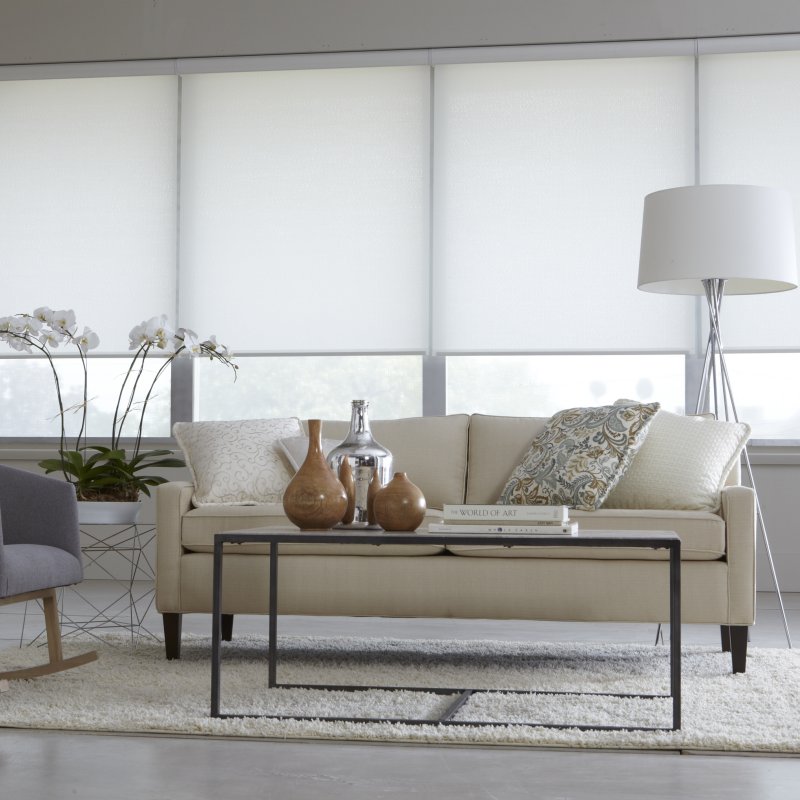
It helps to think of solar shades less as a privacy tool, and more as a light management one.
They’re ideal for spaces where you want to:
- Reduce glare without darkening the room
- Limit heat gain from direct sunlight
- Protect furniture and flooring from UV exposure
- Maintain a connection to the outdoors
In rooms with beautiful views or lots of natural light, they’re hard to beat. They just serve a different purpose than something designed primarily for privacy.
How to Get Privacy at Night (Without Giving Up Solar Shades!)
The good news is that you don’t have to choose between enjoying your view during the day and feeling comfortable at night. With the right setup, you can have both.
One of the most common solutions is layering.
- Curtains or drapery
Curtains or drapery pair naturally with solar shades, giving you the flexibility to keep things open and airy during the day, then fully closed once the sun goes down.
- Dual-shade system
A dual-shade system is where two shades are installed on a single bracket. This allows you to use a solar shade for daytime light control and a second shade, often light-filtering or blackout, for privacy at night. While this isn’t listed on our site, we are happy to take custom orders for dual shades.
- Cellular Shades
If your main goal is privacy, cellular shades are often a better fit from the start. Unlike solar shades, cellular fabrics are not designed to be see-through. Even light-filtering cellular shade options diffuse incoming light while providing some privacy. From the outside, you might notice silhouettes, but not the kind of clear visibility into your windows that solar shades allow. And because they also offer strong insulation benefits, they’re a great choice for both comfort and privacy.
Want to See the Difference for Yourself?

One of the most helpful ways to understand how these materials behave is to see them in action. Fabric visualizers show you how different openness levels, colors, and shade types look from both inside and outside perspectives, during the day and at night.
Solar shades are incredibly effective at what they’re designed to do: manage light, reduce glare, and preserve your view. But when it comes to nighttime privacy, they’re not the right tool on their own.
If privacy after dark is important, layering your window treatments or choosing a more opaque option like cellular shades will give you the result you’re looking for.
And if you’re not sure which direction to go, the team at EcoSmart Shades can help you find the right style of shade for your home, so that you can enjoy your space both day and night.